
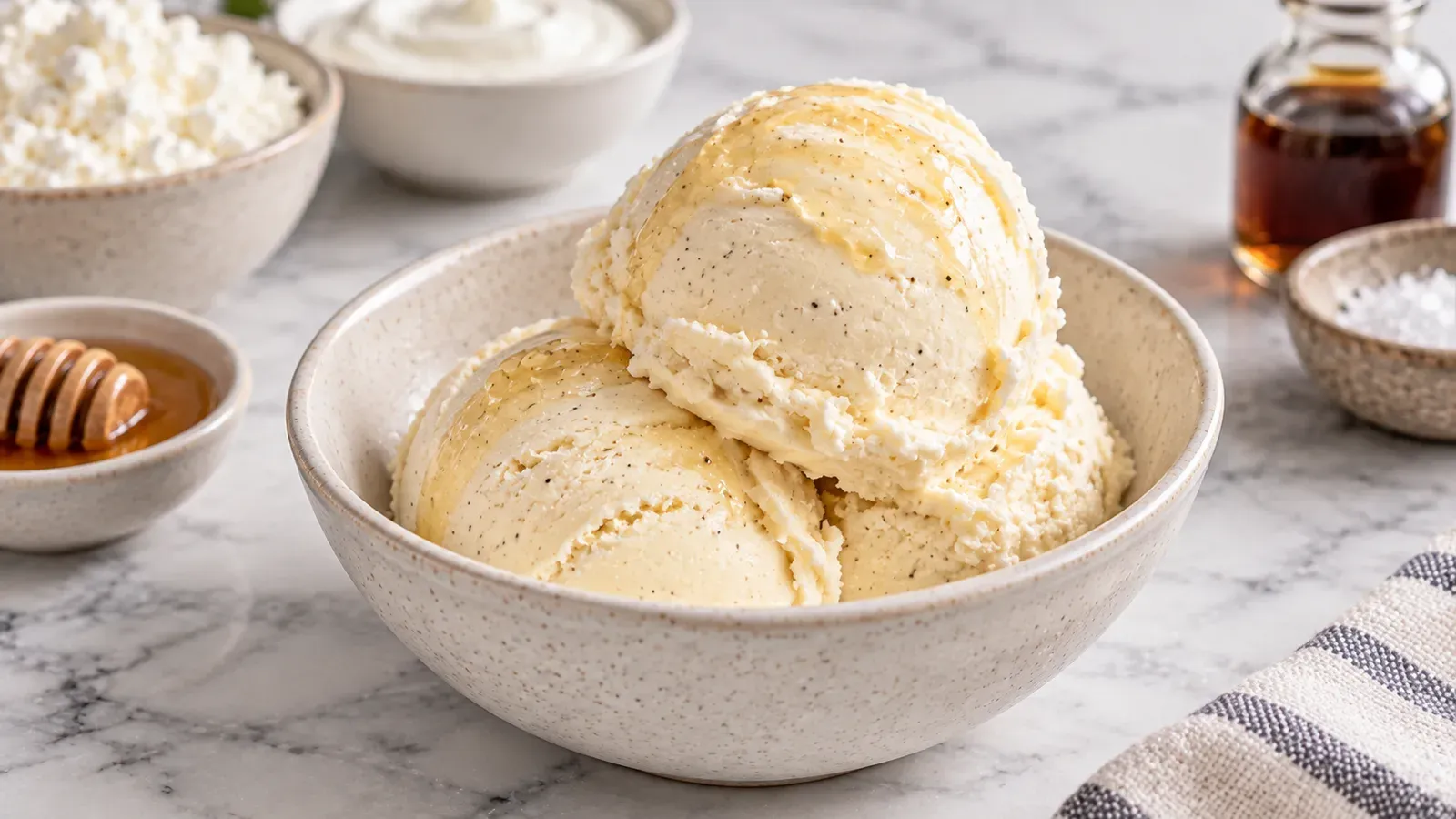
High-Protein Ice Cream
Per serving (about 3/4 cup)
How I calculate this → Protein calculator →
10g of protein per 100 calories.
Cottage cheese blended until completely smooth loses every trace of its usual texture and turns into something closer to a thick, creamy base, which is the whole trick here. I blend it longer than feels necessary, a full 2 minutes, since stopping too early leaves small curds that show up as a grainy texture once frozen. This can be churned in an ice cream maker for the smoothest result, or just frozen in a loaf pan and stirred a few times as it sets.
Why you'll love this
- 18g of protein per serving, all from real dairy, no protein powder
- Under 200 calories a serving
- No ice cream maker required
Recipe
High-Protein Ice Cream
Ingredients
Instructions
- Combine the Greek yogurt, cottage cheese, honey, vanilla, and salt in a blender or food processor.
- Blend on high for a full 2 minutes, scraping down the sides once, until completely smooth with no visible curds.
- If using an ice cream maker, churn according to the manufacturer's instructions.
- If freezing without a machine, pour into a loaf pan and freeze, stirring every 45 minutes for the first 3 hours to break up ice crystals.
- Freeze until firm, at least 4 hours or overnight.
Equipment
- Blender or food processor
- Loaf pan
Notes
- I blend a full 2 minutes, longer than feels necessary. Stopping early leaves small curds from the cottage cheese that turn into a noticeably grainy texture once frozen.
- This sets harder than regular ice cream since it has less fat and sugar acting as a natural anti-freeze. Let it sit at room temperature for 5 to 10 minutes before scooping.
Nutrition (per serving)
| Calories | 180 |
|---|---|
| Protein | 18g |
| Carbs | 24g |
| Fat | 2g |
| Fiber | 0g |
Where these numbers come from
I calculate every figure above from USDA FoodData Central, ingredient by ingredient, then divide by the servings the recipe makes. Each FDC number links to the exact USDA entry I used. How I calculate nutrition
- Greek yogurt (nonfat): FDC #170894 (Yogurt, Greek, plain, nonfat), 1 cup = 227g from the Fage Total 0% label (3/4 cup = 170g); FDC's 245g cup is for regular yogurt, not strained Greek. 2 cups = 454g.
- Cottage cheese (lowfat 2%): FDC #328841 (Cheese, cottage, lowfat, 2% milkfat), 11g protein / 82 kcal / 2.3g fat / 4.31g carb per 100g; FDC's own 1 cup measure = 220g.
- Honey: FDC #169640 (Honey), 0.3g protein / 304 kcal / 82.4g carb / 0.2g fiber per 100g.
- Honey: 1/4 cup = 84.75g (FDC: 1 cup = 339g). Vanilla extract: FDC #173471, 1 tsp = 4.2g.
- Re-verified 2026-09-28: batch totals 70.8g protein, 718 kcal, 6.8g fat, 96.2g carb; divided by 4.
Storage
Freeze in an airtight container for up to 2 weeks. Texture is best in the first week; after that, ice crystals become more noticeable, which is normal for a lower-fat base like this one.
FAQ
Why does this need to sit out before scooping?
Less fat and sugar than regular ice cream means less that stays soft at freezer temperature. Five to ten minutes at room temperature brings it back to a scoopable texture.
Can I use a different sweetener?
Yes, maple syrup works as a direct swap for the honey in the same amount, with a similar effect on the macros.
Do I need an ice cream maker?
No. Freezing it in a loaf pan and stirring it periodically as it sets gets you a similar result, just with slightly larger ice crystals than a machine would produce.
Looking for more dessert options: the cottage cheese chocolate pudding is another no-cook, protein-forward sweet.
Cottage cheese and Greek yogurt both go into this, and Is Cottage Cheese High in Protein? has the numbers on the cottage cheese side.
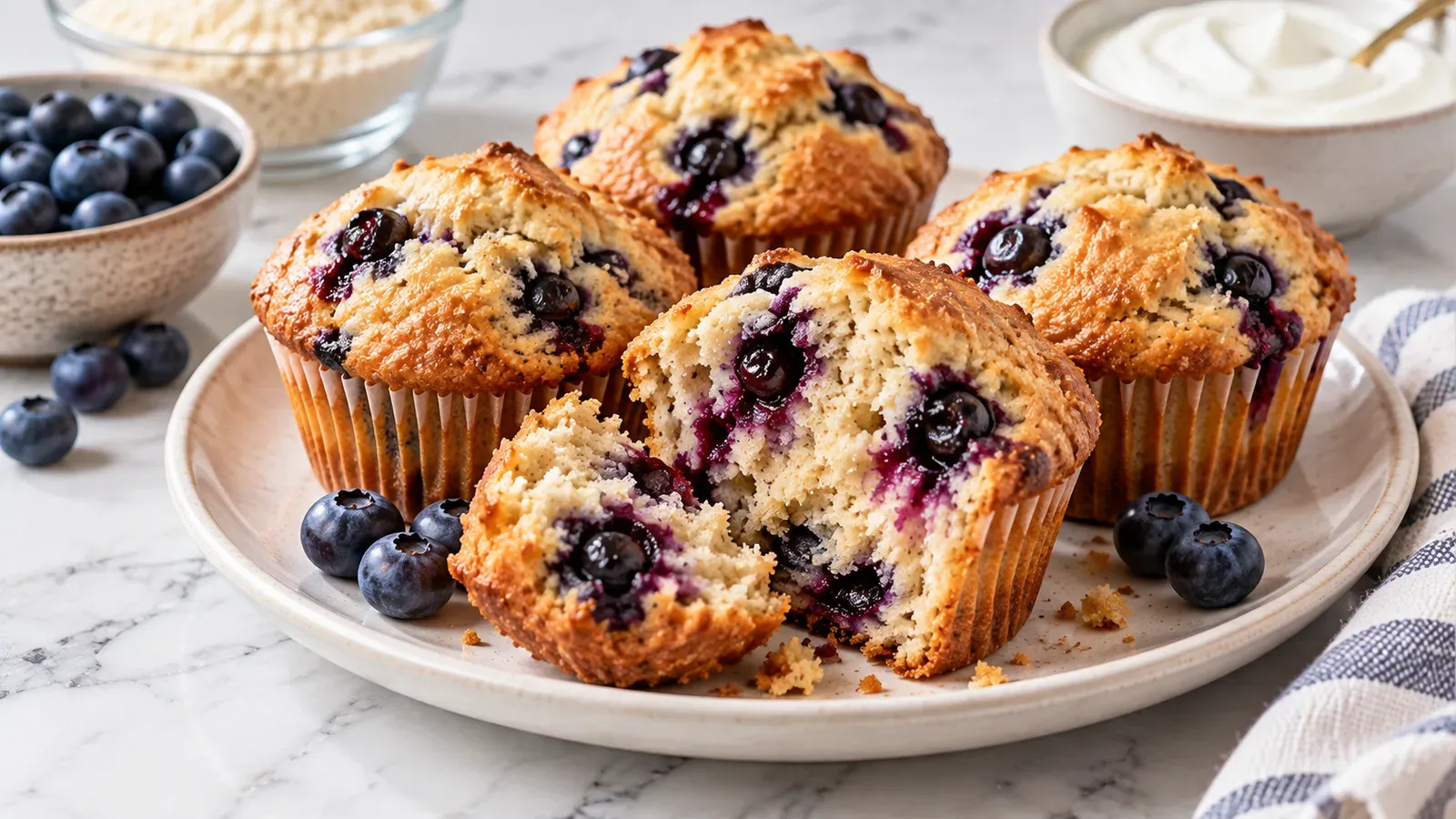
High-Protein Blueberry Muffins
High-protein blueberry muffins made with almond flour and Greek yogurt: gluten-free, low-calorie, ready in 35 minutes.
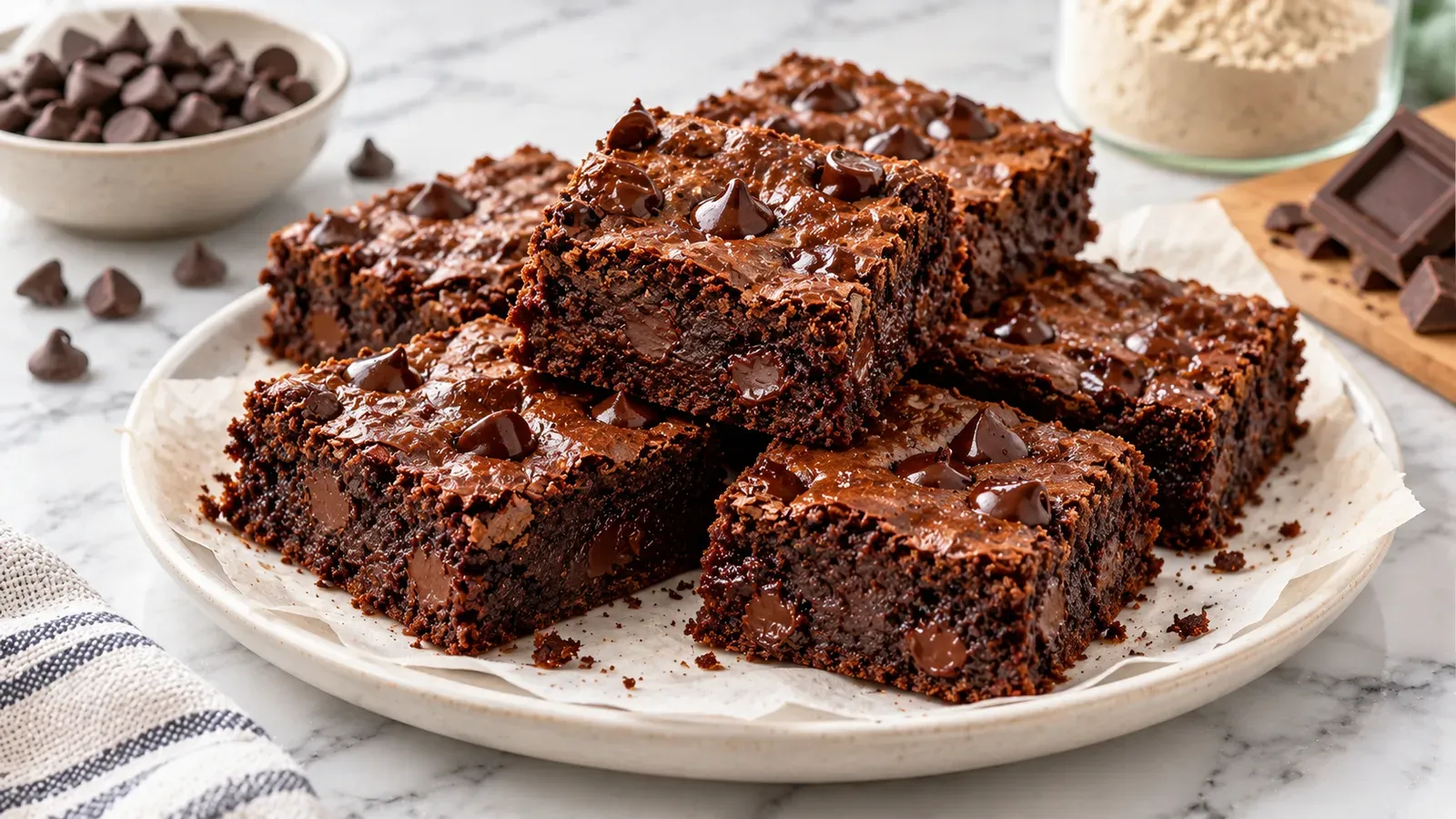
High-Protein Brownies
Flourless high-protein brownies made with black beans: gluten-free, high-fiber, low-calorie.
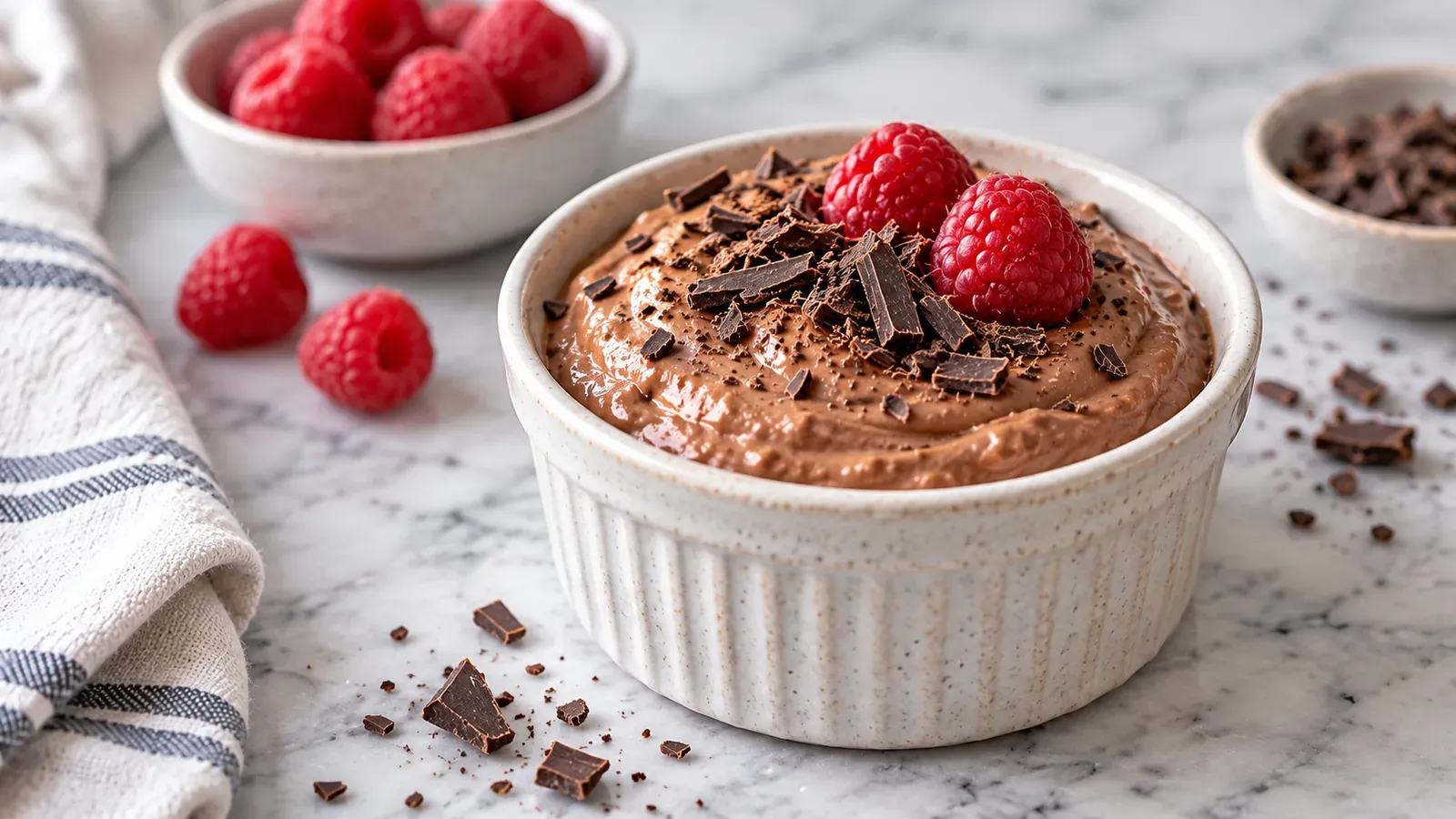
High-Protein Cottage Cheese Chocolate Pudding
High-protein chocolate pudding blended from cottage cheese and cocoa powder: no gelatin, no cooking, just a blender and a few minutes to chill.
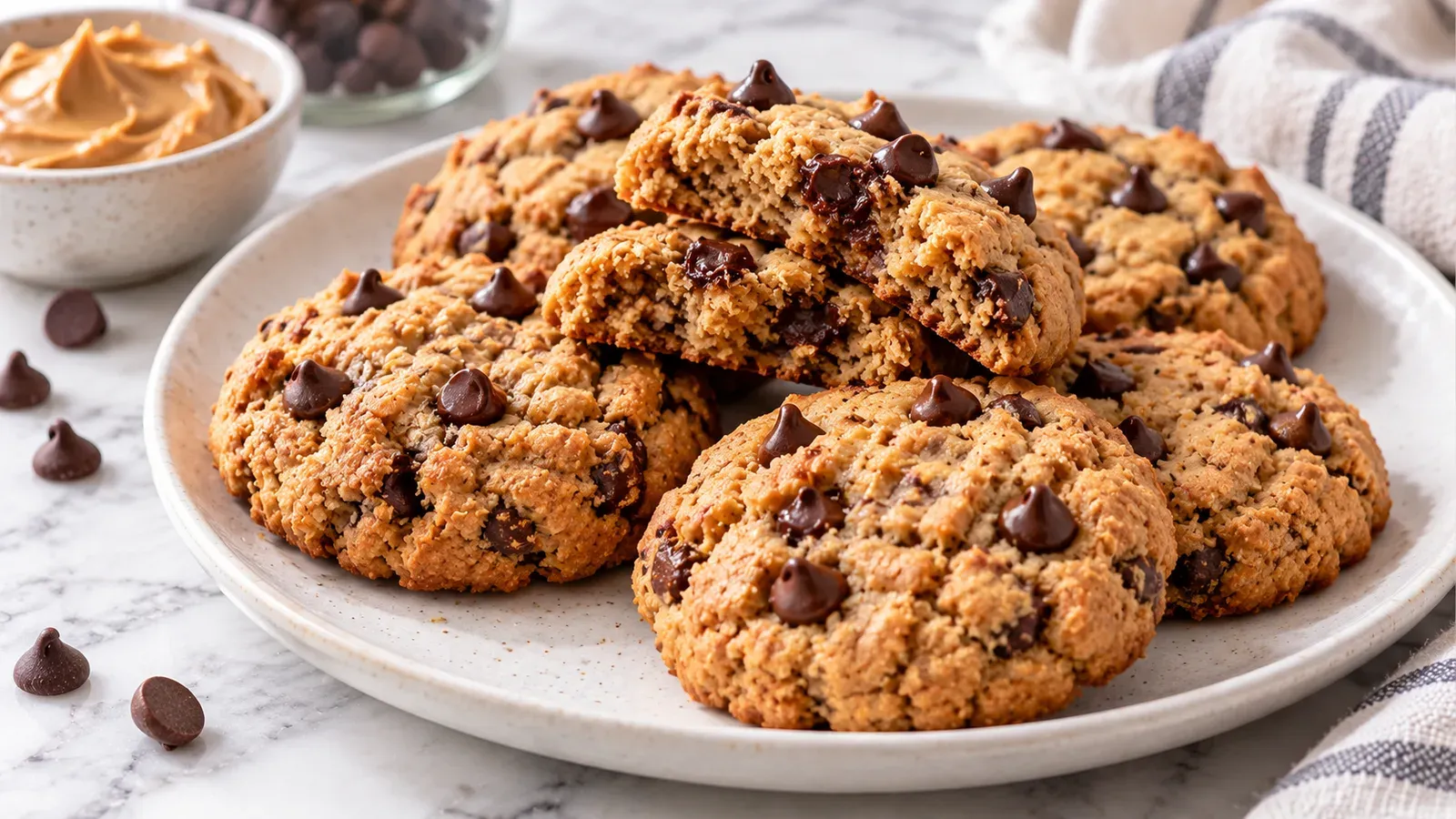
High-Protein Cookies
Flourless high-protein peanut butter cookies with dark chocolate chips: no flour, ready in 20 minutes.
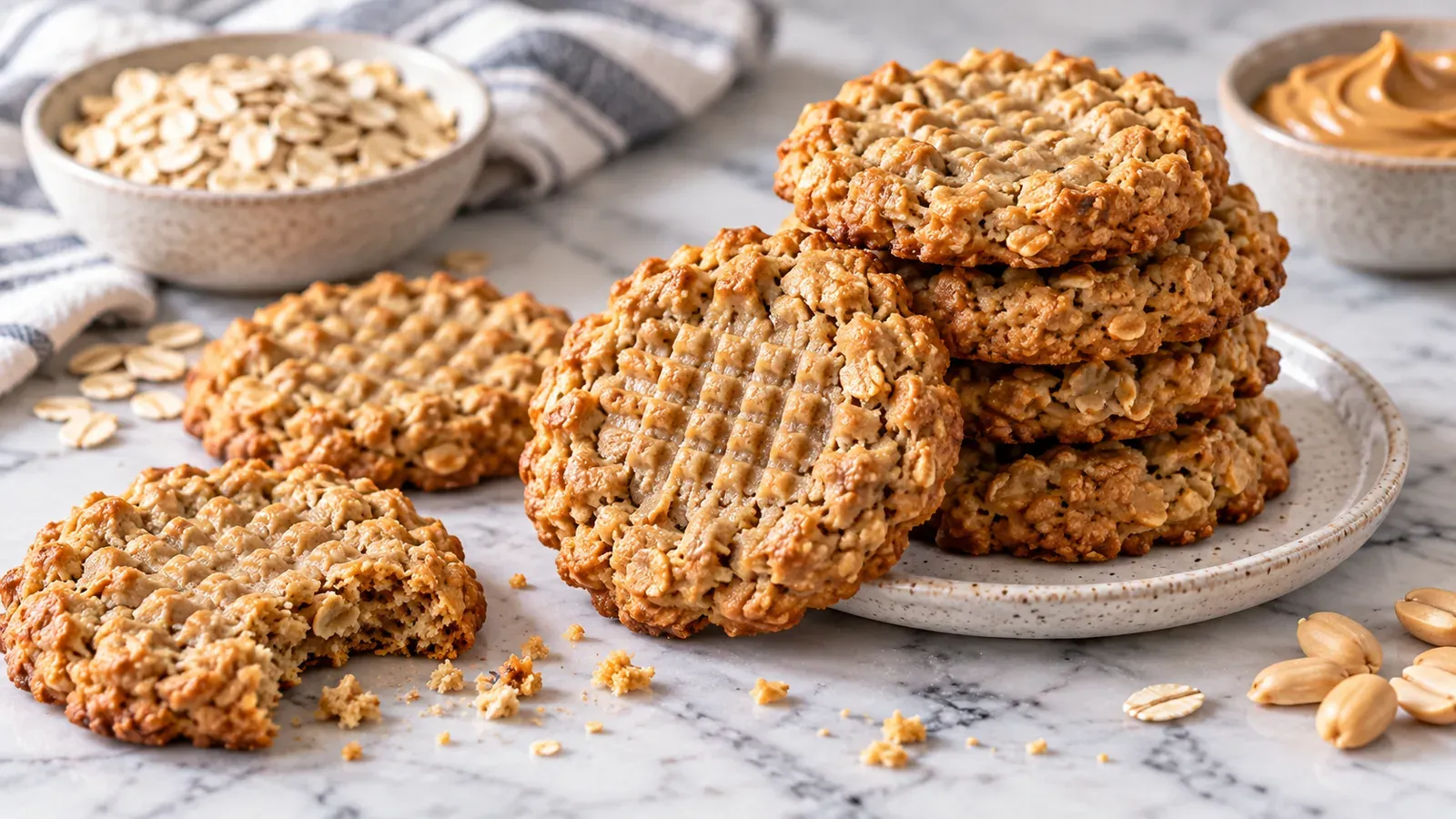
High-Protein Peanut Butter Cookies
High-protein peanut butter oatmeal cookies with no flour: protein powder and oats do the structural work, ready in under 20 minutes.
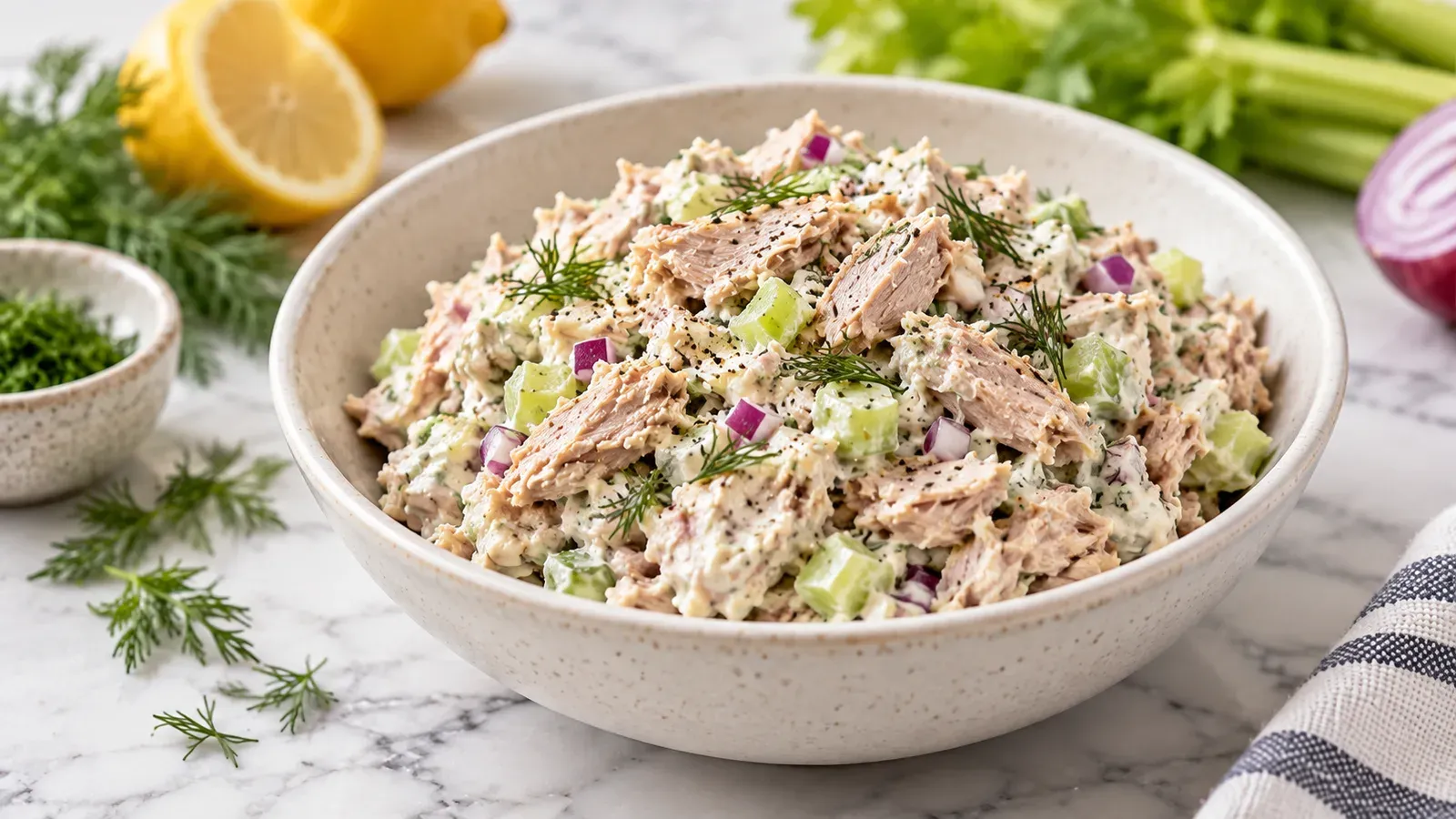
High-Protein Tuna Salad
A high-protein tuna salad made with Greek yogurt instead of mayo: no-cook, low-calorie, ready in 10 minutes.